
Why Do Auto Insurance Rates Feel Like They’re Always Climbing for California Seniors?
It’s a frustrating moment, isn’t it? That notification in the mail, or the email from your insurance company, telling you your auto premium is going up… again. For many California seniors, this isn’t just an occasional annoyance; it feels like a constant battle, a penalty for having celebrated a few more birthdays. You’ve been a safe driver for decades. You know the roads. You’ve seen gas prices come and go, but lately, insurance costs seem to defy gravity, especially as you get older. Many California seniors tell me they feel targeted, almost penalized, just for having reached a certain age.
Honestly, it’s a valid feeling. The short answer is yes, age can play a part in how insurers look at risk. The real answer, though, is far more complicated, especially here in the Golden State. It’s not just about age; it’s about the bigger picture of California’s unique — and sometimes challenging — insurance market.
Think about it. We live in a state prone to everything from wildfires, which can affect property values and claims even if your car isn’t directly burned, to some of the highest repair costs in the nation. Modern cars, while safer, are also packed with expensive tech that costs a fortune to fix after even a minor fender bender. Parts need to be shipped from all over. Labor rates are high. That’s not the whole story. California also has a higher percentage of uninsured drivers compared to some other states, which drives up costs for everyone else. Insurers have to account for that risk.
Which brings up something most people miss. California has very strict regulations under Proposition 103, which limits how much insurers can raise rates and how they use certain factors like age. This is supposed to protect consumers, and it does in many ways. But sometimes, when insurers feel they can’t charge enough to cover their risks here, some have simply stopped writing new policies or even pulled back from the state entirely. That means less competition, and often, higher rates for those who remain. It’s a tough spot for everyone, and seniors often feel it acutely.
The Good News: Discounts Aren’t Just for Young Drivers
Despite the gloomy headlines and the general market craziness, there’s definitely good news. You’re not without options. Many insurance companies, even with all the complexities of the California market, still offer meaningful discounts that can help offset those rising costs. It’s not about being “lucky”; it’s about knowing what to ask for and where to look.

Defensive Driving Courses: More Than Just a Refresher
This is probably the most widely known and often most impactful discount for seniors. In California, if you’re 55 or older, completing an approved defensive driving course can earn you a discount on your auto insurance premium for three years. It’s not a small percentage, either. We’ve seen it make a real difference for clients from San Diego to Sacramento. Programs like the AARP Smart Driver course are popular and widely accepted. They teach you updated driving techniques, refresh your knowledge of traffic laws, and help you stay sharp behind the wheel. It’s a win-win: you become an even safer driver, and your wallet gets a break. Just make sure the course you choose is approved by the California Department of Motor Vehicles (DMV) for insurance discount purposes.
Low Mileage Discounts: Are You Driving Less?
Many seniors find themselves driving less than they used to. Maybe you’re retired, or you’re just not commuting to the office five days a week anymore. If your annual mileage has dropped significantly — say, below 7,500 or 10,000 miles a year — you might qualify for a low mileage discount. Some insurers even have “pay-per-mile” programs or devices you can install that track your driving habits. If you’re only taking short trips around your neighborhood in Los Angeles or visiting family occasionally in the Central Valley, this discount could be a substantial saver. Make sure your insurer knows your actual driving habits.
The Ever-Reliable Good Driver Discount
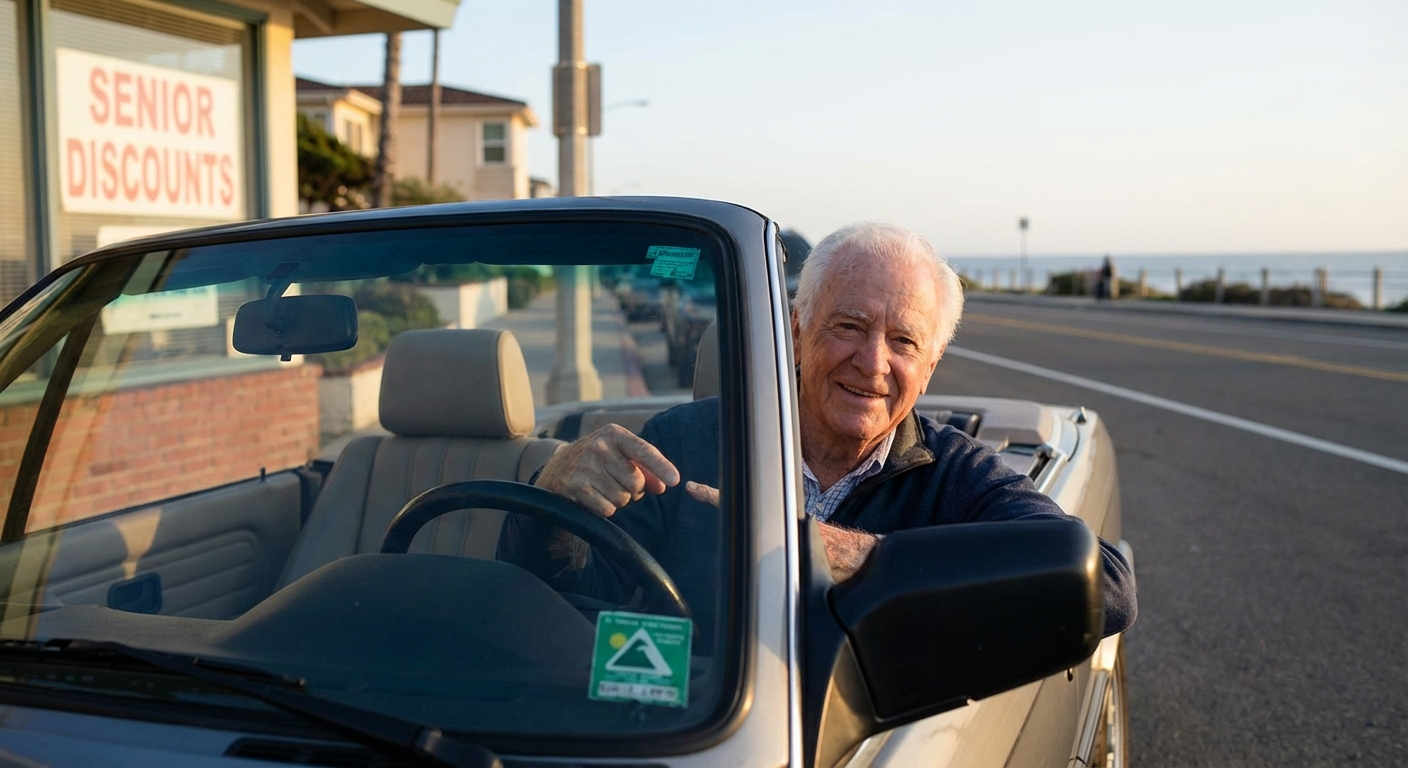
This one isn’t exclusive to seniors, but it’s incredibly relevant. If you’ve maintained a clean driving record for a certain number of years — typically three to five — without accidents or traffic violations, you’re usually eligible for a “good driver” discount. Many seniors boast impeccable driving histories, a testament to years of experience and caution. Don’t assume your insurer automatically applies this; sometimes, you need to remind them, especially if you’ve been with the same company for a very long time.
Bundling Your Policies: A Simple Strategy
Are you insuring your home, condo, or renters’ insurance with the same company that handles your auto policy? If not, you could be missing out on one of the easiest and biggest discounts available. Insurers love it when you keep all your business with them, and they’ll often reward you with a significant multi-policy discount. This applies whether you own a house in Orange County, a condo in San Francisco, or rent an apartment in Santa Monica.
Vehicle Safety Features: Modern Cars Pay Off
Does your car have anti-lock brakes (ABS), airbags, anti-theft devices, or advanced driver-assistance systems (ADAS) like lane departure warning or automatic emergency braking? Modern vehicles, even those a few years old, are packed with features designed to prevent accidents or reduce their severity. Many insurers offer discounts for these safety innovations. It’s worth checking your car’s features list against your policy.
Loyalty and Association Discounts
Sometimes, simply staying with the same insurer for many years can earn you a loyalty discount. It’s not always a huge percentage, but every little bit helps. Also, check if you’re part of any professional organizations, alumni groups, or even clubs like AAA. Many of these associations have partnerships with insurance carriers that offer special rates to their members.
Beyond Discounts: Smarter Ways to Save
Finding discounts is a great start, but it’s not the only way to manage your auto insurance costs in California.
Shop Around — Seriously, Shop Around!
This is probably the single most important piece of advice anyone can give you about insurance. Rates vary wildly from one company to the next, sometimes for the exact same coverage. What State Farm offers in Orange County might be totally different from Farmers in San Diego, or AAA in the Valley. Insurers have different appetites for risk, different formulas, and different target demographics. Don’t just accept your renewal notice. Get quotes from at least three to five different companies every couple of years, or whenever your policy is about to renew.
Review Your Coverage: Do You Still Need Everything?
If you’re driving an older car that’s fully paid off, do you still need full collision and comprehensive coverage? If the car’s market value is low, paying a high premium for coverage that would only pay out a small amount after a deductible might not make financial sense. Consider increasing your deductibles — the amount you pay out-of-pocket before your insurance kicks in. A higher deductible means a lower premium. It’s a trade-off, of course, but for many seniors, it’s a calculated risk worth taking.
Consider an Independent Insurance Agent
Here’s where it gets interesting. Trying to get quotes from multiple companies can feel like a part-time job. You call one, fill out forms online for another, then wait for someone to call you back. It’s exhausting, and frankly, often confusing. This is precisely where someone like Karl Susman steps in.
An independent agent, like Karl, doesn’t work for one specific insurance company. Instead, they work for *you*. Karl Susman and the team at Los Angeles Auto Insurance Quotes, with CA License #OB75129, have access to many different insurance carriers. This means they can shop the market for you, comparing rates and coverages from multiple providers to find the best fit for your specific needs and budget. They understand the nuances of the California market – the unique regulations, the companies that are currently competitive, and the ones to avoid.
Think of it this way: instead of you calling State Farm, then Farmers, then Mercury, then Progressive, then AAA, then a dozen others, you make one call. Karl and his team do all that heavy lifting for you. They know which questions to ask, what discounts to look for, and how to present your profile to get the most favorable rates. They’re your advocate in a complex system.
For a no-obligation quote and to see how Karl Susman can help you find those elusive discounts and better rates, reach out today. You can call Los Angeles Auto Insurance Quotes at (877) 411-5200 or visit our online quote page right now: Get Your Auto Insurance Quote.
Navigating California’s Unique Insurance Market
California’s insurance market has been particularly volatile lately. We’ve seen major players pull back from writing new policies, especially in areas hit by wildfires, creating a ripple effect across the state. This can make finding affordable coverage feel like searching for a needle in a haystack. But wait — this doesn’t mean you’re out of luck. It simply means that having an expert on your side, someone who understands these shifts and knows which companies are still actively competing for business, is more important than ever.
It’s not just about getting a discount; it’s about getting the *right* coverage at a fair price from a reputable company that will be there when you need them. Whether you’re in the bustling streets of San Jose or the quiet communities near Lake Tahoe, having a trusted advisor can make all the difference.
You deserve to feel confident and secure in your auto insurance, knowing you’re not paying a penny more than you should. Don’t let the fear of rising premiums keep you from exploring your options. There’s a path to more affordable, effective coverage.
Ready to explore what options are available for you? Get a personalized quote and let us help you find the auto insurance that truly fits your needs and budget. Visit: Start Your California Auto Insurance Quote.
Frequently Asked Questions About Senior Auto Insurance in California
Q: At what age do auto insurance rates typically start increasing for seniors in California?
There isn’t a single “magic number” age where rates automatically jump. Insurers look at a combination of factors. While age can be one factor in their risk assessment, California’s Prop 103 limits how much age alone can be used. Other things like driving record, mileage, and even the model of your car usually play a bigger role in rate changes.
Q: Can I really get a significant discount for taking a defensive driving course?
Absolutely. For drivers 55 and older in California, completing an approved defensive driving course can lead to a noticeable discount on your auto insurance premium. These discounts typically last for three years, after which you can retake the course to renew the savings. It’s one of the most reliable ways for seniors to save.
Q: Will my insurance company tell me about all the discounts I qualify for?
Not always. While insurers should apply obvious discounts, sometimes you need to proactively ask about them. That’s why working with an independent agent like Karl Susman is so helpful; they know which questions to ask and which discounts to look for on your behalf, often finding savings you didn’t even know existed.
Q: What if I have an older car; does that make insurance cheaper?
It depends. While an older car might have a lower market value, which can reduce the cost of collision and comprehensive coverage, other factors still matter. If it lacks modern safety features, or if parts are hard to find, repair costs could still be high. It’s always a good idea to review your coverage on older vehicles to ensure you’re not overpaying for coverage that won’t benefit you much.
Q: My current insurer just raised my rates significantly. Should I just accept it?
Absolutely not. A rate increase is your signal to shop around. As an independent agent, Karl Susman at Los Angeles Auto Insurance Quotes (CA License #OB75129) helps California drivers compare options from many different companies, often finding better rates and coverage even after a significant increase from a current provider. Don’t assume your current insurer is still the best fit.
This article is for informational purposes only and does not constitute financial advice.