
What You’ll Learn
- Why car insurance for teen drivers in California often feels so expensive.
- The specific factors insurers look at when calculating those rates.
- Actionable steps you can take to potentially lower your teen’s premium.
- The power of comparing quotes from different companies.
- How California’s unique insurance rules affect everything.
Understanding Why Teen Rates Hit So Hard in California
Any parent with a new driver knows the feeling. You get that first car insurance quote for your sixteen-year-old in California, and your jaw probably drops. It’s not just a little more expensive; it’s often *a lot* more. This isn’t some arbitrary punishment; it’s rooted in statistics and the unique way California’s insurance market works.

The Raw Numbers Don’t Lie
Here’s the hard truth: teen drivers, especially those under 18, are simply riskier to insure. Statistically, they’re involved in more accidents than any other age group. Think about it: they’re new to the road, still learning how to anticipate hazards, and sometimes, let’s be honest, they’re a bit overconfident. The Centers for Disease Control and Prevention (CDC) will tell you that motor vehicle crashes are the leading cause of death for U.S. teens. Insurers see these numbers, and they price accordingly.
But wait — that’s not the whole story. California adds its own layer of complexity. Thanks to Proposition 103, passed back in 1988, insurers can’t just set rates however they want. They have to base them primarily on three factors: your driving safety record, how many miles you drive, and how many years you’ve been driving. For a brand-new driver, that last one is a big problem. Zero years of experience means maximum risk in the insurer’s eyes.
Then there’s the broader market. We’ve seen some pretty wild changes recently. Between 2022 and 2024, many Californians saw their premiums jump by 30-50% or more. Why? Inflation, higher repair costs, more severe weather events like the 2025 LA fires — all these things mean insurers are paying out more in claims. When insurers pay more, everyone’s rates go up, and the riskiest drivers (like teens) feel that pinch even harder. Some big names have even pulled back from parts of the state, making it tougher to find competitive rates in places like the Inland Empire.
It’s Not Just Age, It’s Experience
A 16-year-old with a brand new license isn’t just young; they lack a driving history. That’s a blank slate, and in the insurance world, a blank slate often translates to high risk. They haven’t had years to prove they’re safe, responsible drivers. They haven’t navigated rush hour through the Valley or handled a sudden downpour on the 101. Every single insurer is looking for data, for proof of good driving habits. Without it, they have to assume the worst-case scenario.
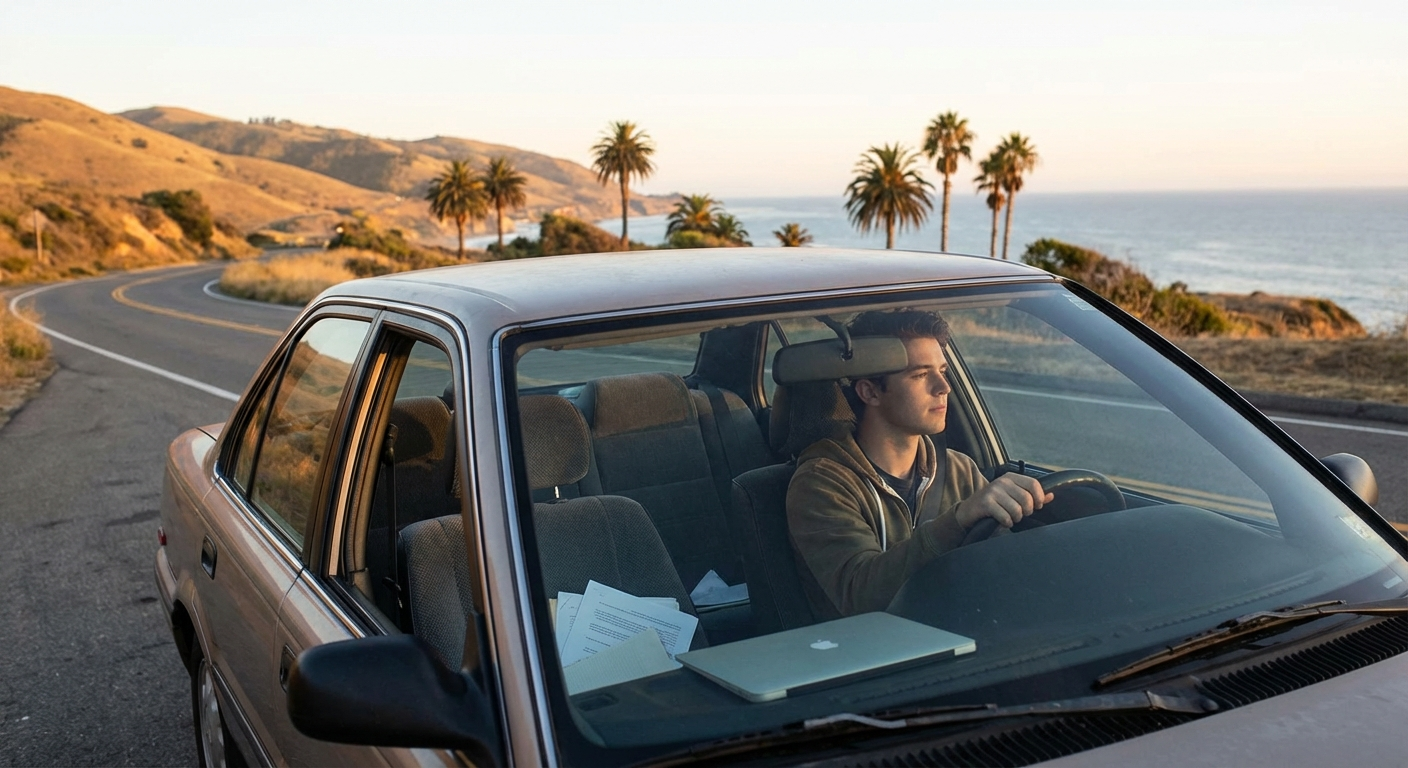
Step 1: Getting Your Teen Driver on the Right Foot (Before They Even Drive Solo)
You can start impacting those rates even before your teen gets their full license. Believe it or not, the provisional license period is a hidden opportunity.
The Provisional License Period Matters
In California, teens get a provisional license at 16, typically after holding a permit for at least six months and completing driver’s education. This provisional license comes with strict rules: no driving between 11 p.m. and 5 a.m. for the first year, and no driving with passengers under 20 (unless a licensed driver over 25 is present) for the first year. These aren’t just arbitrary rules; they’re designed to reduce risk during the most dangerous phase of a new driver’s life.
Here’s where it gets interesting. While your teen is on a provisional license, they’re typically covered under your existing policy. Their rates might not be as high as they will be once they get their full, unrestricted license. Why? Because those restrictions mean they’re less likely to be driving during high-risk hours or with distracting peer passengers. So, enforce those rules. Seriously. Not only does it keep them safer, but a clean provisional record sets them up for better rates down the road.
Driver’s Ed and Defensive Driving Courses
Every teen in California needs to complete driver’s education to get their license. But some go above and beyond. Many insurance companies offer discounts for completing approved defensive driving courses, especially if they’re taught by a certified instructor. These courses teach advanced techniques for avoiding accidents, handling tricky situations, and generally being a more aware driver.
Ask your insurance agent — someone like Karl Susman at Los Angeles Auto Insurance Quotes (CA License #OB75129) — about specific programs that qualify for discounts. Sometimes it’s a small percentage, but every little bit helps when you’re talking about teen driver rates. Plus, the actual skills they learn are priceless.
Step 2: Picking the Right Car for Your Teen (It’s More Than Just Looks)
This might be one of the biggest factors you can control. The type of car your teen drives has a massive impact on the premium.
Safety First, Always
It’s common sense, really. A car with a high safety rating is less likely to result in severe injuries or total loss in an accident. That means fewer claims for the insurance company. Look for vehicles with strong crash test ratings from organizations like the NHTSA or IIHS. Advanced safety features — think automatic emergency braking, lane departure warning, blind-spot monitoring — can also make a difference. Some insurers even offer discounts for specific safety tech.
A 2015 Honda Civic or a 2018 Toyota Corolla, for example, might not be the flashiest cars, but they’re incredibly safe, reliable, and generally cheaper to insure than a souped-up sports car.
Avoid the Flashy and Fast
This one feels obvious, but it’s worth repeating. Sports cars, high-performance vehicles, or even just cars that *look* fast, tend to have higher insurance rates for any driver, let alone a teen. They’re associated with higher speeds, more aggressive driving, and often, more expensive repairs.
Which brings up something most people miss. Certain car models are also more attractive to thieves. A popular, easily stripped car could mean a higher “comprehensive” portion of your premium. So, that flashy used Mustang? It’s probably a double whammy: high risk for accidents and high risk for theft. Stick to something practical, safe, and maybe a little boring. Your wallet will thank you.
Step 3: Smart Moves to Keep Premiums Down Once They’re Driving
Once your teen has their full license and is regularly behind the wheel, there are still plenty of strategies to employ.
Good Grades Pay Off (Literally)
Many insurers offer a “Good Student Discount.” If your teen maintains a certain GPA — typically a B average (3.0) or higher — you could see a decent reduction in your premium. It’s a simple idea: students who are responsible in school are often seen as more responsible behind the wheel. Get those report cards ready!
Telematics: Letting Technology Help (If You’re Up for It)
This is a growing trend. Telematics programs, sometimes called “usage-based insurance,” involve installing a small device in your car or using a smartphone app that monitors driving habits. It tracks things like speed, braking, acceleration, and even the time of day you drive.
Insurers like State Farm (with their Drive Safe & Save) or Farmers (with Signal) offer these programs. If your teen consistently demonstrates safe driving habits, you could earn significant discounts. The short answer is yes, it can save you money. The real answer is more complicated. It means giving up some privacy, and it might not be for everyone. But if your teen is genuinely a safe driver, it’s a powerful tool to prove it and get a better rate.
Higher Deductibles and Lower Coverage (Carefully!)
This is a balancing act. Your deductible is the amount you pay out-of-pocket before your insurance kicks in after a claim. A higher deductible means lower monthly premiums. If you have a decent emergency fund and can comfortably afford a $1,000 or $2,500 deductible, this could be an option. But be honest with yourself: if your teen gets into a fender bender, can you really cover that amount without stress?
Similarly, you might consider reducing some coverage types, especially on an older, less valuable car. If the car is only worth $3,000, paying for full collision and comprehensive coverage might not make financial sense. But this is a decision you need to make very carefully, understanding the potential risks. Talk it through with an expert like Karl Susman before making any changes.
Bundling and Multi-Car Discounts
This is one of the easiest ways to save. If you have multiple cars to insure, or if you bundle your auto insurance with your homeowner’s or renter’s insurance, most companies will give you a discount. It’s a simple incentive to keep all your business with one carrier. Adding your teen to your existing family policy, even if it raises the overall cost, is almost always cheaper than having them get their own separate policy.
Step 4: Shop Around, Shop Around, Shop Around (It’s Your Best Weapon)
Honestly, this is probably the single most effective thing you can do to find better rates for your teen driver.
Why Loyalty Isn’t Always Rewarded
You might have been with the same insurance company for decades. You feel loyal. They know you. But here’s the thing. Different insurers calculate risk differently. One company might see a 17-year-old with a 2016 Camry as a huge risk, while another might offer a surprisingly competitive rate if they have good grades and a clean record.
Especially with the recent volatility in the California insurance market — with some carriers pulling out of areas like Ventura County or raising rates dramatically across the board — you absolutely cannot assume your current insurer still has the best deal.
Working with an Independent Agent
This is where an independent insurance agent becomes invaluable. Unlike agents who work for a single company (like a State Farm or AAA agent), independent agents work with *multiple* insurance carriers. They can compare quotes from dozens of companies, finding the best combination of coverage and price for your specific situation.
Someone like Karl Susman at Los Angeles Auto Insurance Quotes, CA License #OB75129, isn’t tied to just one provider. He can look at your family’s profile — your driving history, your teen’s details, the cars you own — and then shop that profile across many different insurers to see who offers the most favorable terms. It saves you hours of calling around yourself.
Ready to see how much you could save? Get a free California car insurance quote today!
Don’t Just Look at the Big Names
While State Farm, Geico, and Farmers are household names, there are many smaller, regional insurance companies that might offer great rates, especially in specific areas or for particular demographics. An independent agent will have access to these carriers too, widening your options considerably.
Step 5: What to Do If Things Go Sideways (Accidents and Tickets)
No one wants to think about it, but accidents and tickets happen, especially with new drivers. Knowing the consequences can help reinforce safe driving.
The Harsh Reality of Incidents
Even a minor fender bender where your teen is at fault can cause your insurance rates to skyrocket. A single at-fault accident can lead to a 20-50% increase in your premium, and that increase can stick around for three to five years. Speeding tickets or other moving violations will also bump up rates, though usually not as severely as an accident.
This isn’t just about the financial hit; it’s about the responsibility. Make sure your teen understands the direct link between their driving record and the cost of insurance.
Keeping a Clean Record
The best “discount” of all is simply not having any claims or tickets. Encourage safe driving habits from day one. Model good behavior yourself. Talk about defensive driving techniques. Remind them about the rules of the road, especially in busy California traffic through places like Orange County or up in the hills of Ventura County. A clean driving record for those first few years is the fastest way for your teen’s insurance rates to eventually come down.
Frequently Asked Questions About California Teen Driver Insurance
Can my teen get their own policy?
While possible, it’s almost always more expensive for a teen to have their own separate policy than to be added to a parent’s policy. Insurers typically offer multi-car and multi-driver discounts that you’d miss out on.
Does my teen’s gender affect rates in California?
No. California law (Prop 103, again) prohibits insurers from using gender as a rating factor for auto insurance. Rates are based on factors like driving record, experience, and mileage, not gender.
What if my teen only drives occasionally?
Some insurers offer discounts for low-mileage drivers. If your teen drives significantly less than others on the policy — maybe just to school and back, or only on weekends — ask your agent about potential “occasional driver” or low-mileage discounts. Telematics programs can also help prove low usage.
How long will my teen’s rates be so high?
Generally, rates start to decrease noticeably once a driver gains a few years of experience and maintains a clean driving record. You’ll often see a significant drop around age 20-21, assuming no accidents or tickets. Every year of safe driving helps.
What’s the deal with Prop 103 and teen rates?
Prop 103 dictates that driving safety record, annual mileage, and years of driving experience are the primary factors insurers can use to set rates. For teens, the “years of driving experience” factor works against them initially, as they have zero. However, it also means that as they gain experience and maintain a clean record, their rates are legally mandated to improve.
The costs of insuring a teen driver in California can feel overwhelming, but you’ve got options. Don’t just accept the first quote you get. Take the time to implement these strategies and work with someone who can help you navigate the complexities of the market.
Ready to explore your options and find competitive rates for your teen driver? Click here to get a personalized quote from Karl Susman at Los Angeles Auto Insurance Quotes (CA License #OB75129).
This article is for informational purposes only and does not constitute financial advice.