
Understanding Collision Coverage: When Your Car Hits Something
Picture this: You’re navigating the always-busy 405, maybe headed toward the Valley, and traffic suddenly jams. You hit the brakes, but it’s too late. *Thump.* You’ve just rear-ended the car in front of you. Or maybe you misjudged a tight parking spot in downtown San Diego and scraped a pole. What happens next?
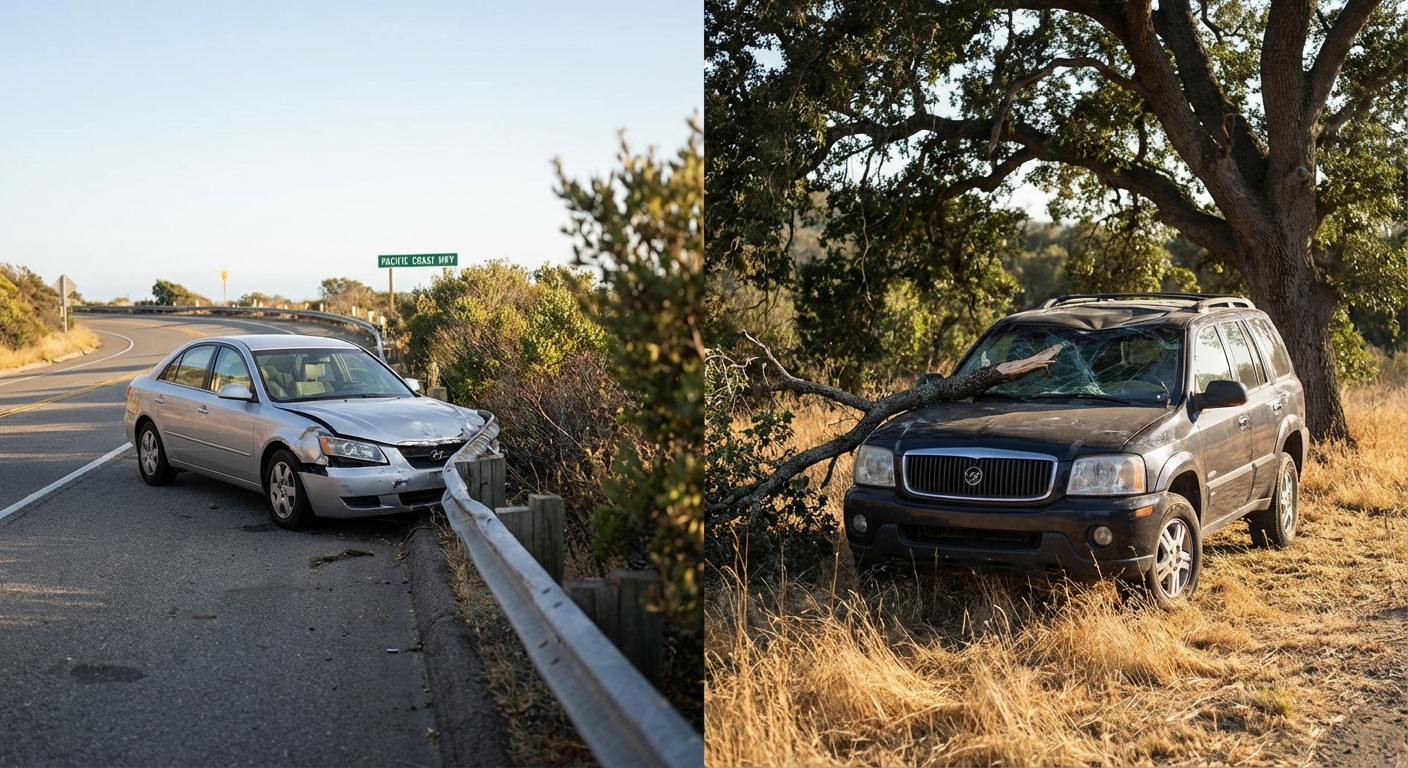
That’s where collision coverage steps in. It’s pretty straightforward, really. This part of your auto insurance policy pays to repair or replace your car when it collides with another vehicle or an object. Think about it: a tree, a fence, a guardrail, even a pothole that does some serious damage to your suspension. It covers the damage to your car, no matter if you were at fault or not.
Most of the time, your lender will insist you carry collision coverage if you’ve got a loan or a lease on your vehicle. And for good reason. They want to protect their investment. If your car is totaled, they want to make sure they get their money back. So, for many Californians driving newer models, collision isn’t really an option; it’s a requirement.
The Deductible Dance with Collision
Just like with most types of insurance, collision coverage comes with a deductible. That’s the amount you agree to pay out-of-pocket before your insurance company starts paying. Common deductibles range from $500 to $1,000, but you might even see $250 or $2,500 options.
Here’s a simple rule of thumb: A higher deductible usually means a lower monthly premium. A lower deductible? You’ll pay more each month, but less if you ever have to file a claim. It’s a balancing act. You have to consider how much cash you could comfortably shell out if you had a fender bender tomorrow. Could you easily cover $1,000? Or would $500 feel much better?
Think about your driving habits too. Do you commute daily in heavy LA traffic, or do you mostly stick to quiet suburban streets in Orange County? Your risk of an accident can play a role in choosing that deductible. It’s a personal decision, reflecting your budget and your comfort level with risk.
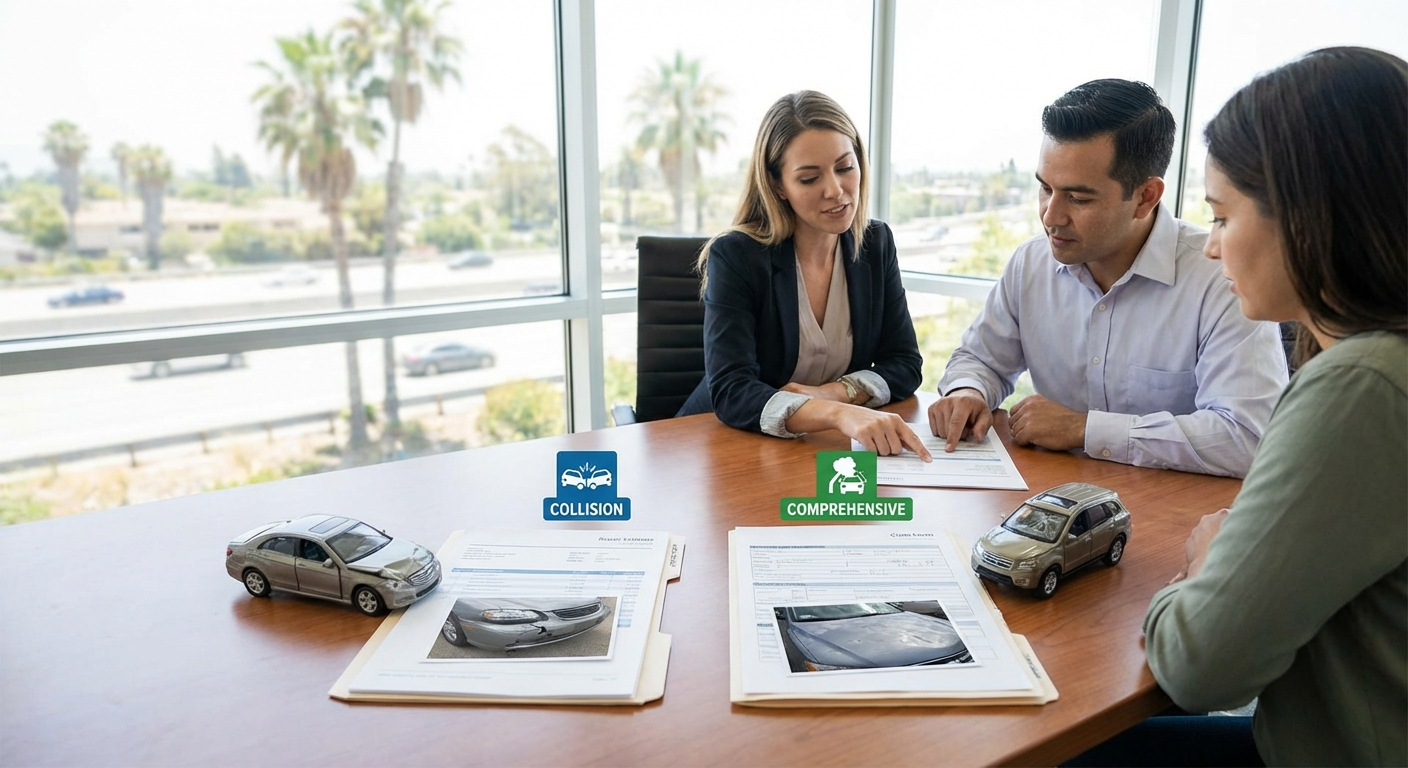
Understanding Comprehensive Coverage: When Life Just Happens
Okay, so collision covers when your car hits something. What about everything else? That’s where comprehensive coverage shines. This type of insurance protects your vehicle from damage that isn’t caused by a collision.
Imagine you wake up one morning in your Ventura County home, step outside, and see a tree branch has fallen on your car overnight. Or maybe you’re parked at the mall, come back, and someone’s keyed your door. Perhaps a deer jumps out in front of you on a foggy morning drive near Sacramento and you hit it. None of these are “collisions” in the traditional sense, but they’re certainly damaging.
Comprehensive coverage handles a whole list of perils:
- Theft or vandalism
- Fire — a real concern in California, especially with recent wildfire events.
- Hail, wind, or flood damage (though floods are less common for cars here than other places, they happen).
- Falling objects, like that tree branch.
- Damage from hitting an animal.
- Glass breakage, like a cracked windshield.
It’s all those unpredictable, often unavoidable things that can happen to your car when you’re not even driving it—or when you’re driving, but not colliding with another vehicle or object.
The Deductible for Comprehensive: Similar, But Different Risks
Just like with collision, comprehensive coverage also has a deductible. You’ll typically find similar ranges, say $250, $500, or $1,000. And the principle remains the same: higher deductible, lower premium; lower deductible, higher premium.
But the risks you’re protecting against are different. Are you worried about car break-ins, which unfortunately happen all too often in busy urban areas? Do you live in an area prone to wildfires? While your home insurance handles the house itself, comprehensive auto insurance is what would kick in if your car were damaged by fire. Knowing your local risks helps you decide if comprehensive is a good fit, and what deductible feels right.
For many drivers in California, especially those in areas with higher crime rates or near wildland-urban interfaces, comprehensive coverage offers a lot of peace of mind. It’s the safety net for all those “what ifs” that aren’t about crashing into another car.
Why the Confusion? They’re Often Sold Together
It’s easy to get collision and comprehensive mixed up. Why? Because most insurance companies, like State Farm, AAA, or Farmers, usually bundle them together. They’re both designed to protect your own vehicle, and they both typically come with a deductible. But here’s the thing: they cover completely different scenarios. One’s for impacts you cause or are involved in, the other’s for pretty much everything else under the sun.
Think of them as two sides of the same coin, both aimed at physical damage to your car. But you can actually have one without the other, in some cases. Though, for most people, especially with newer cars, you’ll have both.
When Do You Really Need These Coverages in California?
This is where the rubber meets the road. Deciding whether to keep collision and comprehensive coverage, or what deductible to choose, isn’t a one-size-fits-all answer. It truly depends on your specific situation.
The Loan/Lease Factor: Not Much Choice Here
If you have a loan or lease on your car, you almost certainly need both collision and comprehensive. Lenders require it to protect their asset. They don’t want to be stuck with a totaled car and no way to recoup the money they loaned you. This is standard practice across California, from the dealerships in Bakersfield to the leasing offices in Beverly Hills.
The Older Car Dilemma: Is it Worth It?
Once your car is paid off, the decision is entirely yours. Many people start to question these coverages as their car ages. Why? Because the value of your car eventually drops below the cost of the premiums plus your deductible. For instance, if your 15-year-old car is only worth $3,000, and your annual collision and comprehensive premiums cost $800, plus a $500 deductible, you’re paying $1,300 just to get $3,000 back if it’s totaled. Is that a good deal?
Honestly, for many older cars, it’s not. Some folks use a general rule of thumb: if your car is worth less than 10 times your annual collision and comprehensive premium, it might be time to drop them. But that’s just a guide. You’ve got to do the math for your own vehicle and your own budget.
Consider your personal financial situation, too. Could you afford to replace your car out of pocket if it were stolen or totaled tomorrow? If the answer is “absolutely not,” then keeping these coverages, even on an older car, might be a smart move for your peace of mind.
Your Driving Environment and Local Risks
California is a big state with diverse risks. If you live in a dense urban environment like San Francisco or downtown Los Angeles, car theft and vandalism rates might be higher. Comprehensive coverage becomes a more compelling choice there. If you’re in a more rural part of the state, perhaps near the Sierra Nevada foothills, you might be more concerned about hitting a deer or other wildlife.
And then there are the wildfires. If you live in or near areas like the canyons of Malibu or the foothills of the Inland Empire, where wildfire risk is a constant concern, comprehensive coverage is really non-negotiable for protecting your car from fire damage. It’s a very real threat here.
Your Budget and Risk Tolerance
Ultimately, your decision comes down to your personal finances and how much risk you’re willing to take. Can you comfortably pay for repairs or a new car if something happens? If so, you might consider higher deductibles or even dropping these coverages on an older vehicle.
But if losing your car would be a major financial setback, then paying a bit more for the protection of collision and comprehensive coverage is a sound investment. It’s about finding that sweet spot where you feel secure without overpaying.
Trying to figure out the right mix for your California vehicle can feel like a puzzle. That’s why talking to an expert, someone who knows the ins and outs of the Golden State’s insurance market, can make all the difference. They can help you weigh your options based on your car, your driving habits, and your budget.
If you’re ready to explore your options and get a clearer picture of what collision and comprehensive coverage mean for you, it’s easy to start. You can get a personalized quote right now and see how these choices impact your premium: Get Your Auto Insurance Quote Here.
Getting the Right Advice: Karl Susman is Your Guy
Navigating the world of auto insurance, especially when you’re trying to balance protection with cost, can be tricky. It’s not just about getting the cheapest policy; it’s about getting the *right* policy for your specific needs.
That’s where a seasoned pro comes in. Karl Susman of Los Angeles Auto Insurance Quotes (CA License #0B75129) has been helping Californians make smart insurance decisions for years. He understands the unique challenges drivers face here – from the crowded freeways of Orange County to the winding mountain roads near Big Bear. He and his team can explain the nuances of your policy options, helping you understand exactly what you’re paying for and why. Don’t hesitate to give them a call at (877) 411-5200 for straightforward, honest advice.
Choosing your coverages isn’t just about ticking boxes; it’s about protecting your assets and your peace of mind. Taking the time to understand collision versus comprehensive is a big step in that direction. And remember, your needs can change. What made sense when you bought your car might not make sense five years down the road.
Ready to see what your insurance could look like with the right coverage for your lifestyle? Take a few minutes to get some numbers tailored just for you:
Click Here for Your California Auto Insurance Quote
Frequently Asked Questions About Collision & Comprehensive
Is collision insurance required in California?
No, the state of California does not legally require you to carry collision insurance. However, if you have a car loan or lease, your lender will almost certainly require it to protect their investment.
Does comprehensive cover hitting a deer?
Yes, hitting an animal like a deer is typically covered under your comprehensive insurance, not collision. That’s because it’s considered an “other than collision” event.
If my car is stolen, which coverage pays?
If your car is stolen, your comprehensive coverage is what would pay out to help you replace it, after your deductible. Collision insurance wouldn’t apply in that situation.
Will my rates go up if I file a comprehensive claim?
Sometimes, but not always. Comprehensive claims are often for events outside your control (like hail or theft), so they might not impact your premium as much as an at-fault collision claim. However, a history of multiple comprehensive claims could still lead to an increase.
Can I have collision without comprehensive, or vice versa?
Yes, you technically can. But most insurers will encourage you to have both, especially for newer vehicles, since they cover distinct types of damage to your own car. It’s rare to see someone with one but not the other unless they’re driving a very old car and making very specific cost-cutting decisions.
This article is for informational purposes only and does not constitute financial advice.