
The California Road Ahead: What Your Car Insurance Might Look Like in 2026
Picture the Millers, a family out in Bakersfield. Mark and Sarah have lived in the Central Valley their whole lives. Their son, Ethan, just turned sixteen and got his driver’s license, a shiny new permit clutched in his hand. They’re thrilled, of course, but also a little stressed. Adding a new, young driver to their policy in California? That’s a whole different ballgame than it used to be. As 2026 rolls into view, they’re wondering what it all means for their family budget, their coverage, and that new driver on the road. They aren’t alone.
California, for all its sunshine and scenic drives, has a funny way of making car insurance feel like a maze. It’s not just about getting a policy; it’s about understanding what the state *says* you need versus what you *really* need to protect your family, your car, and your finances. And with the way things have been shifting in the insurance world lately, looking ahead to 2026 means facing some uncomfortable truths.
The Bare Minimum: What the DMV Wants
Let’s start with the basics. The state of California isn’t asking for much, at least on paper. For 2026, you can expect the minimum liability insurance requirements to stay the same as they’ve been for a while. These are often called the “15/30/5” limits, and they break down like this:
- $15,000 for injury/death to one person: If you cause an accident and someone else gets hurt, your insurance will pay up to fifteen thousand dollars for their medical bills or related costs.
- $30,000 for injury/death to more than one person: If multiple people are injured in an accident you cause, the policy will pay a total of thirty thousand dollars, split among them.
- $5,000 for property damage: For any damage you cause to another person’s car, fence, mailboxes, whatever, your insurance covers up to five thousand dollars.
Sounds simple enough, right? The truth is, these numbers are tiny. A fender bender in a crowded part of San Jose or a minor incident on the 405 near Long Beach can easily exceed that $5,000 property damage limit. And medical bills? Even a trip to the ER for a minor injury can blow past $15,000 pretty fast. That means if you only carry the minimum, you’re on the hook for anything beyond those limits. And that’s a scary thought.
Why Those Minimums Are a Risky Gamble
Imagine the Millers. Young Ethan, driving for the first time, makes a mistake. He rear-ends a luxury SUV on Highway 58. The other driver is fine, but their vehicle needs $15,000 in repairs. Ethan’s policy only covers $5,000. That extra $10,000? That comes straight out of Mark and Sarah’s pocket. Or worse, if someone gets hurt, even a whiplash injury, and the medical bills hit $20,000. Suddenly, the Millers are facing a $5,000 bill they didn’t expect.
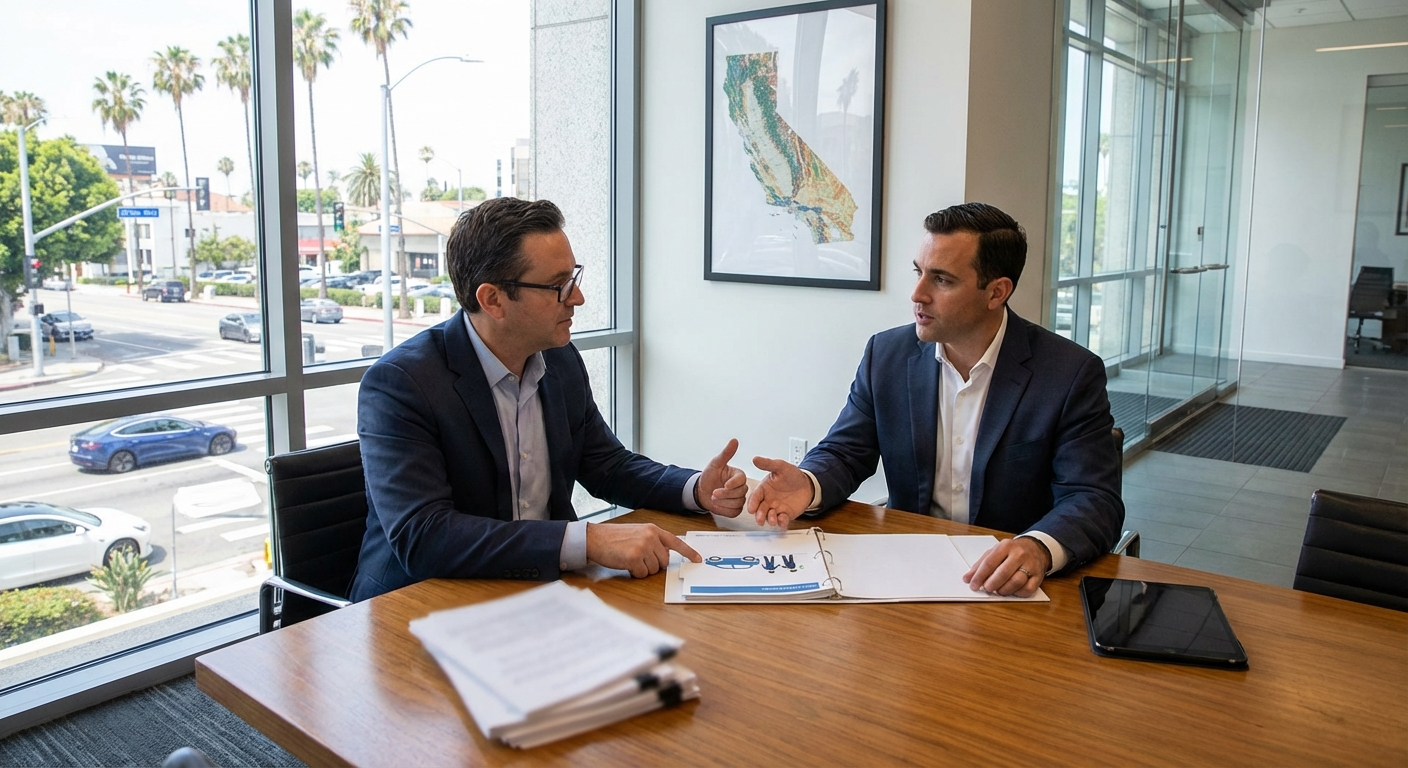
This is where common sense bumps up against state requirements. Most seasoned insurance professionals, like Karl Susman at Los Angeles Auto Insurance Quotes, will tell you that the minimums are just a starting point. For most Californians, they’re simply not enough protection. Property values are high here, medical costs are high, and frankly, so are legal fees if an accident turns into a lawsuit.
Beyond the Basics: What Else Should You Consider?
The state-mandated minimums only cover damage and injuries you cause to *other* people. What about your own car? Your own injuries? That’s where other types of coverage come in.
Collision and Comprehensive: The Big Two
Most people know about these. Collision coverage pays to fix your car if you hit something – another car, a tree, a rogue shopping cart in a parking lot. Comprehensive coverage handles pretty much everything else: theft, vandalism, fire (a real concern with the fires we see, even if your car isn’t directly in a blaze, smoke damage can happen), hail, even hitting a deer in the foothills of the Sierra Nevada. If you’ve got a car loan, your lender will almost certainly require you to carry both of these.
Uninsured/Underinsured Motorist Protection: A California Must
Here’s where it gets interesting. California has a lot of uninsured drivers. Some estimates put it around 15%, maybe higher in certain areas like parts of the Inland Empire. What happens if you get hit by someone who doesn’t have insurance, or only carries those measly state minimums, and your damages are far greater? That’s where Uninsured/Underinsured Motorist (UM/UIM) coverage kicks in. It protects *you* and your passengers. Honestly, this isn’t optional for most people; it’s a smart move in California.
Medical Payments and Personal Injury Protection
These cover medical expenses for you and your passengers, regardless of who was at fault. Medical Payments (MedPay) is usually a lower limit, while Personal Injury Protection (PIP) can be more extensive and also cover lost wages. While not mandatory in California, having some form of medical coverage for you and your passengers can be a huge relief if you have an accident, especially if your health insurance has a high deductible.
The Changing California Insurance Climate: What to Expect in 2026
The biggest story in California insurance lately isn’t just about what’s required, but what’s *available* and at what *price*. Premiums jumped 40% between 2022 and 2024 for many drivers. Why? A lot of reasons.
For one, repair costs are through the roof. Modern cars are full of sensors and complex electronics. A dinged bumper isn’t just a body shop fix anymore; it might involve recalibrating cameras and radar systems. That’s expensive. Here’s something most people miss: The cost of parts, labor, and even rental cars while yours is in the shop – it’s all gone up. Which brings up something most people miss. Insurance companies have to pay out more for claims, so they have to charge more for policies.
But wait — there’s also the issue of insurance companies themselves. Several major insurers, like State Farm and Farmers, have either limited new policies or pulled back from certain areas of California. Why? They’ll tell you it’s because the state’s regulatory environment, particularly Prop 103, makes it hard for them to raise rates quickly enough to keep up with their costs. This means less competition, and often, higher prices for those still writing policies. It’s a tough spot for consumers, especially in high-risk zones or crowded urban centers like Los Angeles or Orange County.
Getting the Right Coverage for Your Situation
So, what should the Millers do for Ethan? And what about you? The short answer is yes, you need car insurance. The real answer is more complicated. You need enough coverage to protect your assets – your home in Ventura County, your savings, your future earnings. If you cause a serious accident and only have minimum coverage, a lawsuit could wipe out everything you’ve worked for.
For most drivers, especially those with any assets to protect, increasing liability limits to something like 100/300/50 or even 250/500/100 is a smart move. It costs more, sure, but often not as much as you’d think for the extra peace of mind. And don’t forget UM/UIM. It’s a lifeline.
If you’re feeling overwhelmed, that’s normal. The rules don’t change much from year to year, but the market certainly does. That’s where an independent agent can help. They work with multiple carriers, not just one, and can help you compare options, understand the fine print, and find the best fit for your budget and your needs. Someone like Karl Susman at Los Angeles Auto Insurance Quotes (CA License #OB75129) has seen it all and can cut through the noise.
Don’t just renew your policy blindly. Take a moment, especially as we head into 2026, to review your coverage. Are you truly protected? Or are you just meeting the bare minimum, leaving yourself open to financial disaster?
Ready to see what your options are? Get a quote today and talk to a real person who understands California insurance.
Frequently Asked Questions About California Car Insurance in 2026
What are the absolute minimum car insurance requirements in California for 2026?
For 2026, California’s minimum liability limits are expected to remain at $15,000 for injury/death to one person, $30,000 for injury/death to more than one person, and $5,000 for property damage. This is often referred to as 15/30/5 coverage.
Do I really need more than the minimum coverage?
While the state minimums are legal, they offer very little financial protection. If you cause an accident, medical bills and vehicle repair costs can easily exceed these limits, leaving you personally responsible for the difference. Most experts recommend significantly higher liability limits, along with Uninsured/Underinsured Motorist coverage, to properly protect your assets.
Why are California car insurance rates so high, and are they still rising?
California rates have seen significant increases due to rising repair costs (modern cars are complex and expensive to fix), increased medical expenses, and the overall cost of claims. Some insurers have also reduced their presence in the state, which can affect competition and pricing. It’s tough to predict exactly what 2026 will bring, but the trend has been upward.
What happens if I can’t find affordable car insurance in California?
If you’re struggling to find coverage through standard channels, California has a “last resort” program called the California Automobile Assigned Risk Plan (CAARP). It ensures that all licensed drivers can get at least the minimum required liability coverage. However, these policies can be more expensive and offer less coverage than what you’d find on the open market. It’s always best to work with an independent agent like Karl Susman who can shop around for you first.
How can I potentially lower my car insurance premiums in California?
Many factors affect premiums, but you can try to save money by maintaining a clean driving record, asking about discounts (good student, multi-policy, low mileage), choosing a higher deductible, and driving a safer, less expensive car. Shopping around with different insurance providers is also key. Don’t hesitate to reach out to Karl Susman at Los Angeles Auto Insurance Quotes, CA License #OB75129 for a personalized review.
Planning your insurance needs for 2026 doesn’t have to be a guessing game. Get clarity on your options today. Click here to get a quote and connect with an expert.
This article is for informational purposes only and does not constitute financial advice.