
Myth: My Zip Code Is the ONLY Thing That Drives My Car Insurance Bill.
Honestly, it’s a common thought. Many Californians believe their zip code is the ultimate price tag for their car insurance. You hear stories, right? Someone moves just a few miles down the road, and suddenly their premium jumps or drops by hundreds of dollars. It feels like magic — or maybe just bad luck.
The short answer is yes, your zip code matters a lot. The real answer is far more complicated. California’s insurance laws, thanks to Proposition 103 from way back in 1988, actually mandate that your driving record, the number of miles you drive each year, and your years of driving experience are the *primary* factors. They come first. Only after those are considered can insurers then look at other things, like where you live.
But here’s the thing. Once those main factors are on the table, your specific address in California becomes a huge player. It’s not just about the city itself. Sometimes, moving from one side of a major street to another, even within the same town, can change your rates. Why? Insurers split cities into tiny rating territories. And those territories have their own stories to tell.
Why Does My City Even Matter for Car Insurance?
Think about it this way: insurance is all about risk. Insurers are trying to guess how likely you are to file a claim. Your city — or even your particular neighborhood within that city — offers a big clue.
Maybe you live in a dense urban area like downtown San Francisco. Or perhaps it’s a sprawling suburb in the Inland Empire. Big difference. Different places have different levels of exposure to various risks. Is there a lot of traffic? High rates of car theft? Are you in a wildfire zone? All these questions get answered by your address.
That’s not the whole story. Even within a city, some areas just see more accidents. More fender-benders, more hit-and-runs. When insurers look at the raw data for a specific zip code, they see patterns. If your area has a higher frequency of claims, guess what? Everyone living there generally pays a bit more. It’s not personal; it’s just statistics.

Theft and Vandalism: A City’s Dark Side
Some cities, or even specific pockets within them, just have higher crime rates. We’re talking about stolen vehicles, smashed windows, catalytic converter thefts – you name it. If you live in an area with a documented history of high auto theft, your comprehensive coverage premium, which covers these types of losses, will naturally be higher.
Consider parts of Oakland or certain neighborhoods in Los Angeles. Insurers like State Farm or Farmers track these trends very closely. They know which zip codes report more stolen cars or more vandalism claims. It’s not about whether *your* car will be stolen, but the odds for *any* car in that specific area. Those odds factor into your bill.
Traffic and Accidents: The Daily Grind
California’s roads are legendary for traffic. Anyone who’s ever driven the 405 in LA during rush hour, or tried to cross the Bay Bridge on a Friday afternoon, knows the struggle. More cars on the road means more opportunities for accidents. It’s simple math.
Cities with high population density and complex road networks — think San Jose, Long Beach, or even the bustling streets of Ventura County — tend to have higher accident rates. This isn’t just about big crashes, either. It’s also about minor scrapes, door dings in parking lots, and rear-end collisions. Every little ding adds up in an insurer’s calculations for your area.
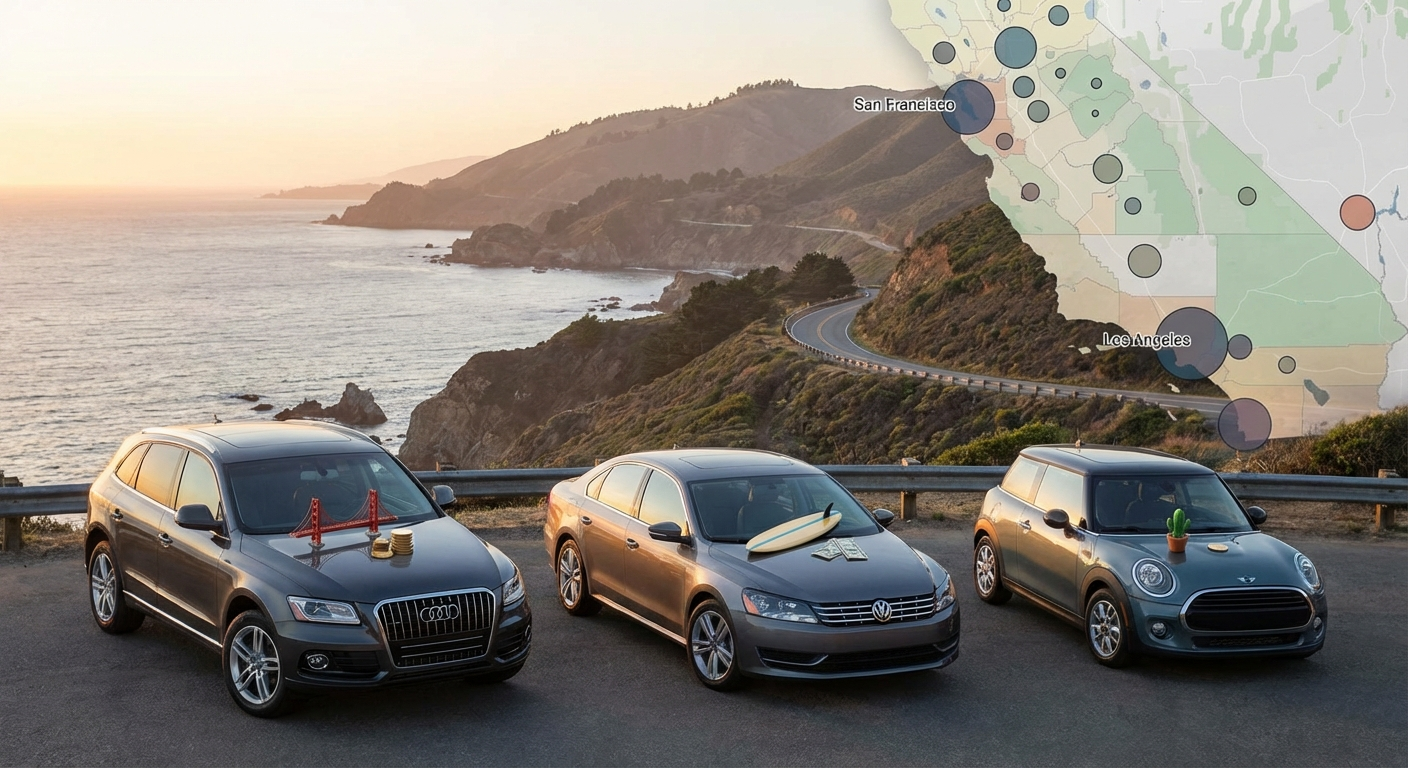
Natural Disasters: Beyond Your Control
Here’s where it gets interesting. California faces a unique set of natural risks. Wildfires are a constant threat, especially in areas bordering wildlands, like parts of the Santa Monica Mountains or the foothills of the Sierra Nevada. Flooding can hit coastal communities or areas near rivers. Earthquakes? Well, they can happen anywhere.
While your car insurance usually doesn’t cover earthquake damage, comprehensive coverage *does* protect against fire and flood. If your home is in a high-risk wildfire zone — say, one of those areas that might see a major blaze like the projected 2025 LA fires — your comprehensive premium could climb. Insurers are looking at the overall risk to property in that area, and your car is part of that property.
It’s Not Just *Where* You Live, It’s *Who* Lives There.
This might sound a little unfair, but it’s how insurance works. Insurers don’t just look at *your* driving record. They also look at the collective driving behavior and claims history of everyone else in your general vicinity.
If you live in a neighborhood where many drivers have a history of accidents or traffic violations, that collective risk profile can push up rates for everyone there. Even if you’re a perfectly safe driver, you’re still part of that statistical group. It’s like being on a team – your individual performance matters, but so does the team’s overall track record. This is a big reason why a zip code can make such a difference.
The “Good Driver” Discount: Still King, Even in a Pricey City.
Despite all this talk about cities and risk, your personal driving record remains arguably the most powerful factor in your car insurance cost. California’s Prop 103 makes sure of that. If you’ve maintained a clean driving record — no at-fault accidents, no major violations like DUIs, and few or no minor tickets — you’ll qualify for significant “Good Driver” discounts.
Insurers typically look back three to five years, sometimes even seven, depending on the violation. A pristine record can absolutely help offset some of the higher costs associated with living in a high-risk city. It’s your best defense against those rising premiums. So, drive carefully. It pays off, literally.
What Can I Do to Lower My California Car Insurance Bill?
Okay, so your city matters. Your driving record matters more. What’s next? Plenty. You’re not powerless against rising premiums.
First, shop around. Don’t just stick with the first quote you get, or even your current insurer year after year. The market changes constantly, especially in California, where premiums jumped 40% between 2022 and 2024 for many drivers. Different companies — AAA, Progressive, GEICO — weigh risk factors differently. What one insurer sees as high risk, another might view as moderate.
Consider raising your deductibles. If you can afford to pay a bit more out-of-pocket in case of a claim, raising your deductible from $500 to $1,000 can significantly lower your premium.
Ask about discounts. There are tons: multi-car, multi-policy (bundling auto and home insurance), good student, defensive driving courses, low mileage, even telematics programs that track your driving habits.
This is where an independent insurance agent really shines. They work with multiple carriers and can compare quotes for you, finding the best combination of coverage and price. Someone like Karl Susman of Los Angeles Auto Insurance Quotes (CA License #OB75129) can walk you through the options, explaining how each choice impacts your bottom line. They know the California market inside and out.
Ready to see how much you could save? Get a personalized quote today: https://losangelesautoinsurancequotes.com/get-a-quote/
Navigating California’s Tricky Insurance Market Today.
The truth is, California’s auto insurance market has been challenging lately. Some insurers have pulled back, others have raised rates dramatically, and getting coverage can feel like a maze. This isn’t just about auto insurance, either; the property insurance market has also seen big shifts, with changes even to the FAIR Plan.
This makes shopping around even more important. An independent agent isn’t tied to one company. They’re on your side, helping you find the best fit in a market that’s constantly shifting. They understand the nuances of things like why your premium went up even though you had no tickets, or why a new insurer might offer you a much better deal. It’s their job to make sense of it all.
Don’t just accept your renewal notice at face value. A quick call could save you serious money.
Frequently Asked Questions About California Car Insurance by City
Does moving to a different neighborhood always change my car insurance rate?
Not always. While moving within the same city can sometimes shift your rate, it’s not a guarantee. It depends on how your new address falls into an insurer’s specific rating territories. Sometimes, moving just a few blocks makes no difference, while other times, it can be a significant change due to varying risk factors in adjacent zones.
Can my credit score affect my car insurance in California?
No. California is one of the few states that prohibits insurers from using credit scores to determine car insurance rates. This is another protection under Proposition 103. So, while your credit might impact other financial products, it won’t factor into your auto premium here.
If my city has high theft rates, will my liability coverage also be more expensive?
No, not directly. Higher theft rates primarily impact the cost of your comprehensive coverage, which pays for things like theft and vandalism. Your liability coverage, which pays for damage or injuries you cause to others, is more affected by accident rates, traffic density, and your personal driving history.
What if I commute from a low-risk city to a high-risk city for work? Which city’s rates apply?
Your car insurance rate is primarily based on the address where your car is garaged overnight – usually your home address. However, the number of miles you drive each year, and the nature of your commute (e.g., driving through heavy traffic areas) are also factors. So, while your home city dictates the base rate, your driving habits and commute can still influence the final cost.
Is it true that some insurers won’t write policies in certain California cities?
It’s not that they won’t write policies at all, but some insurers may become more selective or raise their rates significantly in areas they deem too high-risk. This has become more common in the current market, especially in areas with very high theft rates or significant natural disaster exposure. This is why shopping around with an independent agent is so important – they can help you find an insurer still willing to offer competitive rates in your area.
Don’t let the complexities of California car insurance leave you scratching your head. Get expert help and find the best rates for your specific situation. Visit: https://losangelesautoinsurancequotes.com/get-a-quote/
This article is for informational purposes only and does not constitute financial advice.